
Mount Robson Provincial Park is often overlooked by visitors to Western Canada that are intent on ticking off the more well-known and visited parks near Banff, Jasper and Golden. I must admit that my first visit to the park was by pure happenstance: during a loosely-planned two-day visit to Jasper, my friend and I decided on a whim to rent a car and head into the mountains, with no real destination in mind. After a few hours and many photo stops, Mount Robson came into view. After catching sight of the intimidating peak and the mysterious valleys surrounding it, I knew I had to come back and explore the park further when I had more time. It was not until a few years later that I managed to return, and I’m extremely happy that I did. The Berg Lake trail remains one of my top multi-day hikes that I’ve completed in Western Canada. The variety of terrain, stunning vistas, and well-organized booking system are hard to beat.
Mount Robson Provincial Park is located near Valemount, British Columbia – about an eight-hour drive from Vancouver. Our group of three set off on the Labour Day weekend in 2018 for our Berg Lake adventure. We left on the Friday night after work and stayed in a small hotel in Kamloops. On Saturday, we started ridiculously early and drove the remaining four-and-a-half hours to the park’s Visitor Information Centre. All hikers must register here and watch an instructional video before setting out on the trail. I would recommend purchasing a map at the Centre, too. There are many campsites and optional side-trails from the main valley hike, and the official map has descriptions of these, distances between campsites, and other information that we found useful on our journey.
As we knew we would be starting the hike in the afternoon, we had reserved Whitehorn as our first campsite. There are seven campgrounds scattered along the trail, and hikers must book these in advance. Reservations open on October 1st for the following year’s hiking season, and can be booked through the BC Parks website. I would recommend getting in quickly after reservations open to secure your desired campsites. This is even more important if you are on a tight time schedule like we were. Kinney Lake and Whitehorn campgrounds are popular choices for hikers to stay on their first night, as they are 7 and 11 kilometres respectively from the trailhead – both good distances to cover on the first day of hiking. With an early start, hikers could make it to Emperor Falls campsite, which is 16 kilometres from the trailhead, on the first night, too. Of course, if you’re super fit (and a little bid badass) hiking the whole 23 kilometres to Robson Pass in one day is always an option. However, make sure to account for the trail’s elevation profile when planning your hike. From the trailhead to Robson Pass the elevation gain is just under 800 metres. The steepest section of trail lies between Whitehorn and Emperor Falls, where you gain roughly 500 metres via many switchbacks. With a heavy pack on your back, this section can take longer than you may expect. The Berg Lake campground, is, unsurprisingly, right on the shores of the spectacular Berg Lake, and as such, is very popular. If you are intent on staying at this campsite, and plan to do the hike over a long weekend, be prepared to book as soon as registration opens. There are pros and cons to each of the campsites, but ultimately each one lies in a spectacular setting and you won’t be disappointed with your choice. As we knew we wanted to do a side-trip on the third day, we selected Robson Pass, right at the end of the trail, as our campground for the second night. As Whitehorn is a rough half-way point for the 23 kilometre trail, we elected to stay there again on the third and final night of the trip.
Visitor Centre to Whitehorn Campground
The trail from the Visitor Centre is wide and mostly flat, following the Robson River up the valley to Kinney Lake. Bikes are permitted on the trail up to the lake, and some hikers do opt to ride with their packs to this campsite, lock the bikes up, and continue their journey on foot from there. My imaginings of how I would balance a large pack on my back while riding a bike all ended with me sprawled on the ground, so we did not entertain this possibility at all. When we came to those last seven kilometres on the way back to the trailhead, my feet aching and legs stumbling along, I did think wistfully of having two wheels to carry me downhill, though.
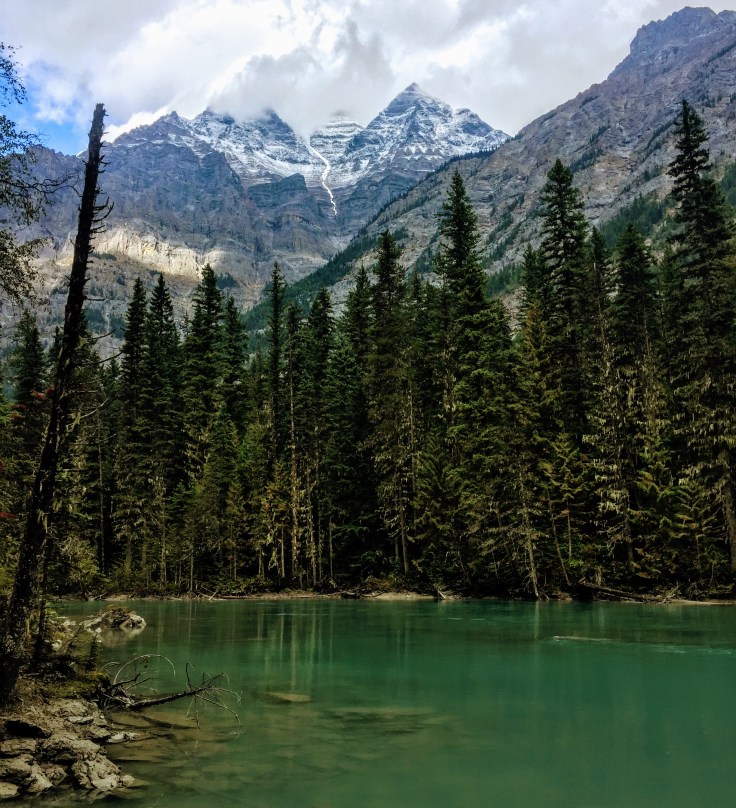
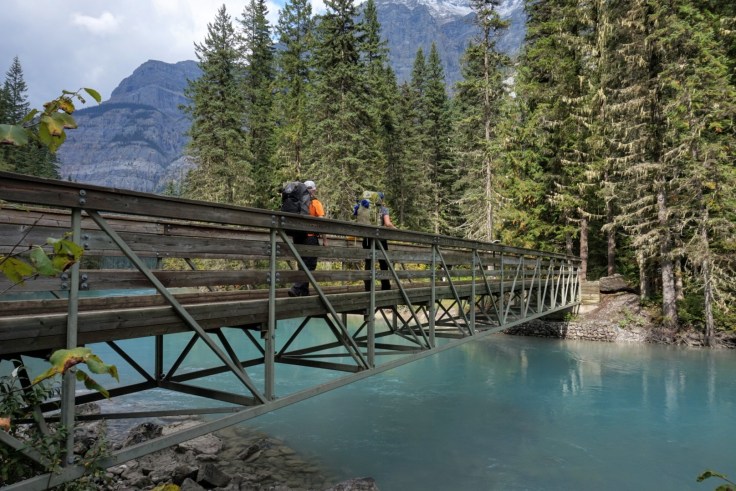
After a brief stop for snacks at the picturesque Kinney Lake shelter, we shouldered our packs and headed on. The valley here opens up into rocky flats, with various streams of the river braiding through the landscape. The trail criss-crosses the stream several times before ascending the Valley of a Thousand Falls.
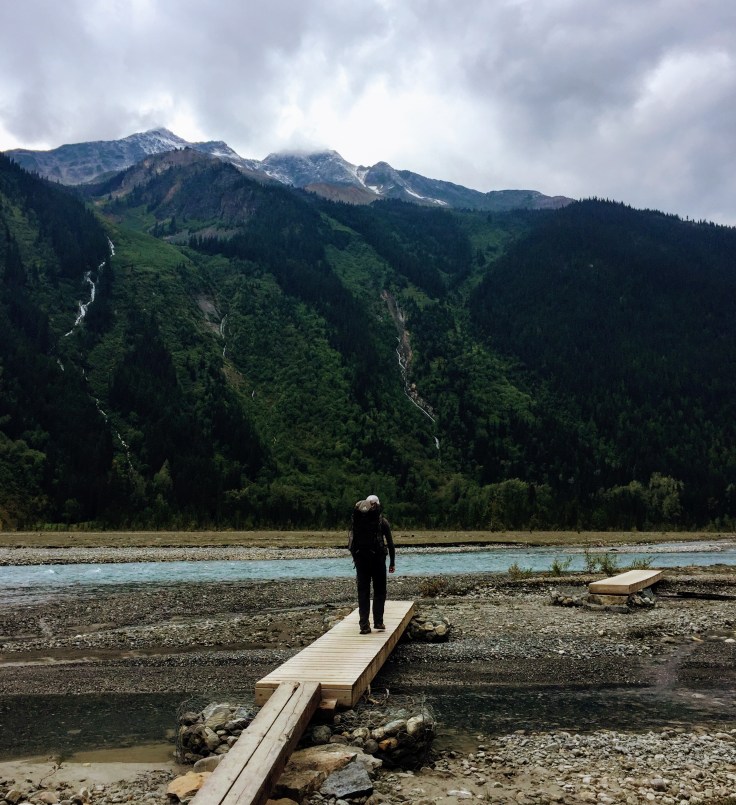
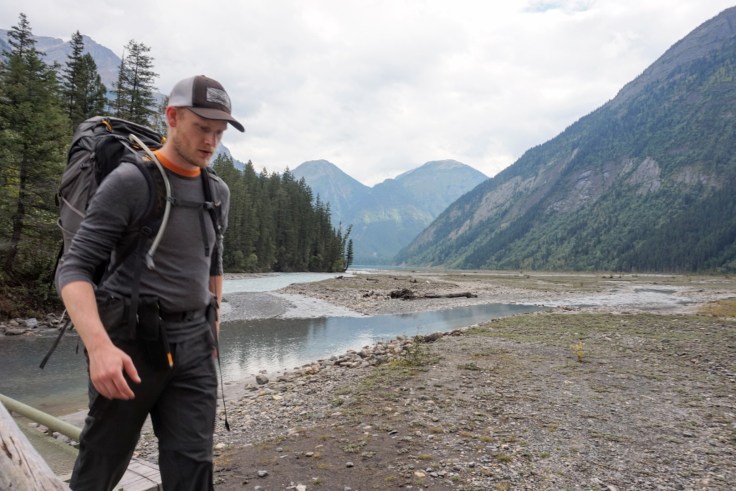
As we progressed, the valley walls became steeper and steeper until sheer vertical cliffs rose on either side of us. We crossed a final bridge as the last light of the day disappeared, and Whitehorn campground greeted us, right on the banks of the roaring river. We had a quick backcountry meal for dinner, then turned in for the night.
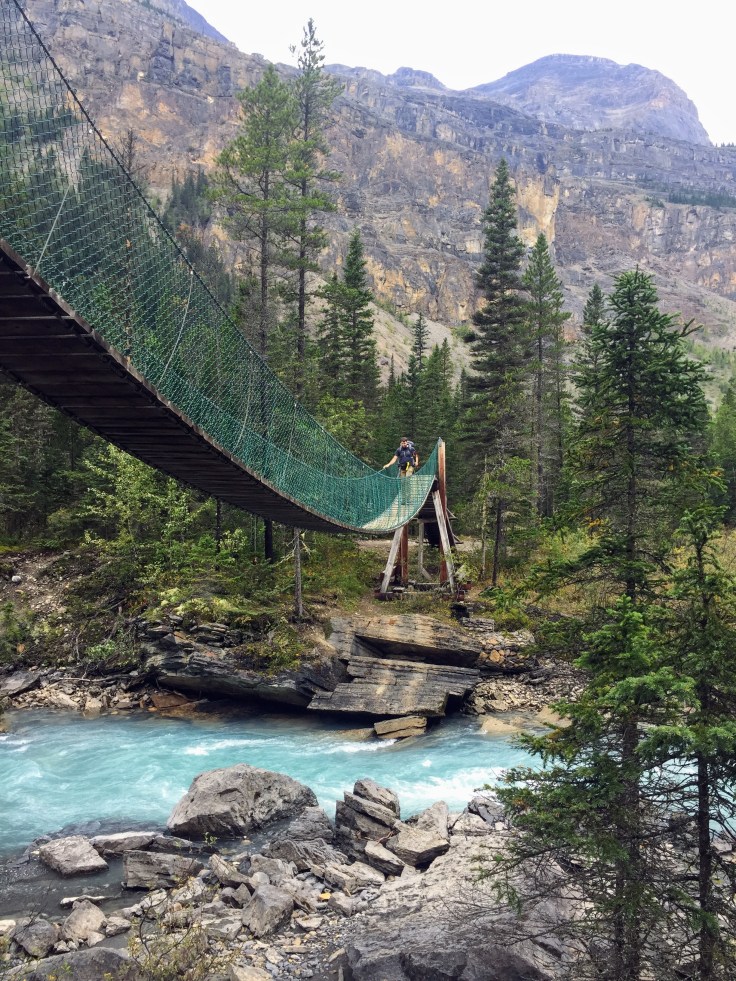
Whitehorn to Robson Pass
We enjoyed a big breakfast the next day, fueling up for the ascent ahead of us. While there were many switchbacks, the uphill slog was not as bad as I had been expecting, and there were plenty of beautiful views to stop and enjoy along the way. This valley is very aptly named; we stopped counting the waterfalls we saw as there were just so many cascading down the valley walls.
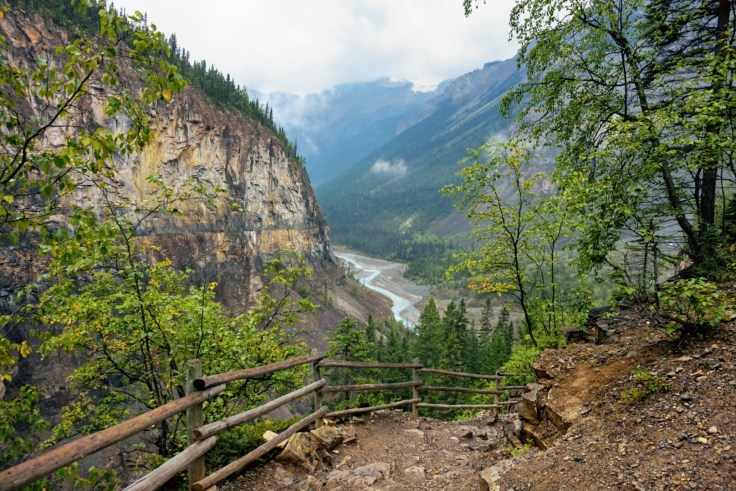
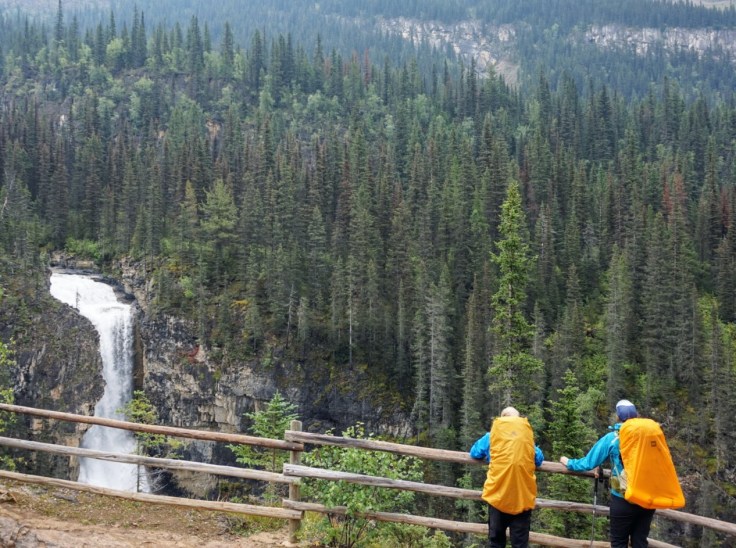
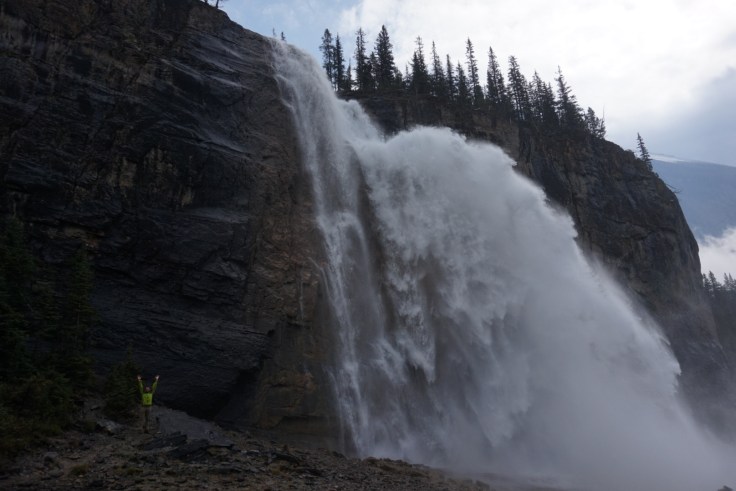
Of course, the real highlight in the waterfall department on this hike is Emperor Falls. The falls are not particularly high as far as waterfalls go, but are quite spectacular as the huge volume of water tumbling over the cliff hits a ledge halfway down, producing a large spray. Put your rain jacket on a fair distance from the falls, as otherwise you will quickly soak through. We stopped at the falls for lunch and the mandatory photos, then pushed on.
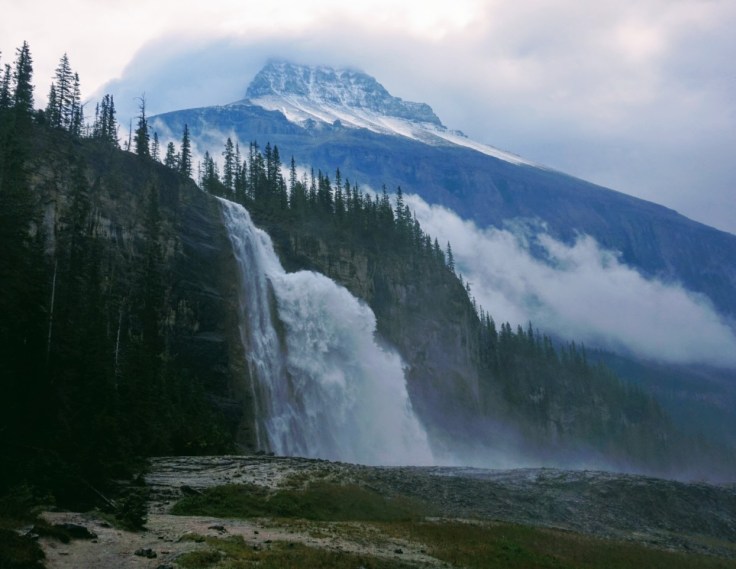
The Emperor Falls campsite is located a short way further along the trail, and has fantastic views of Mount Robson. Unfortunately for us, the peak was shrouded in clouds when we passed through.
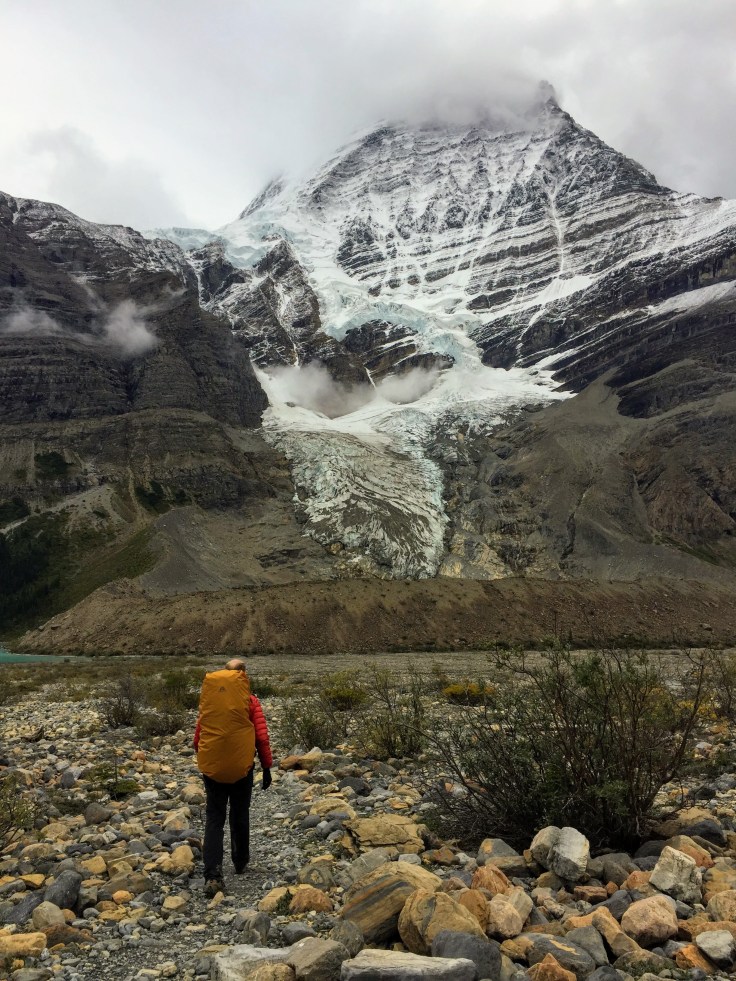
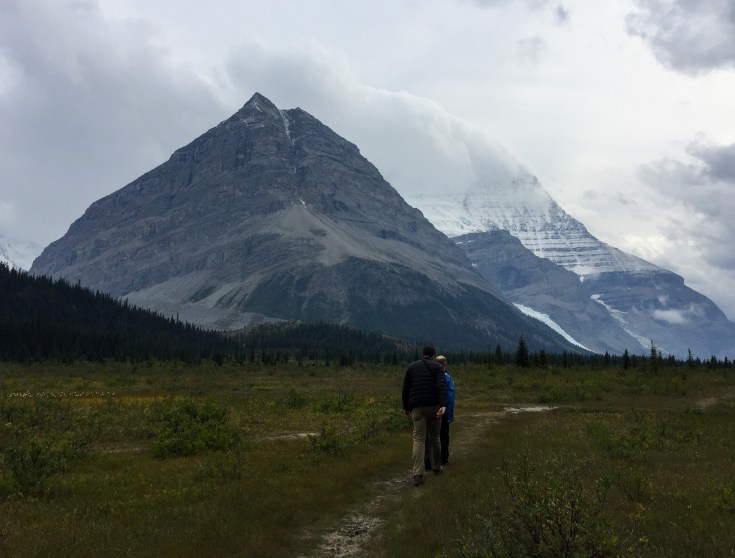
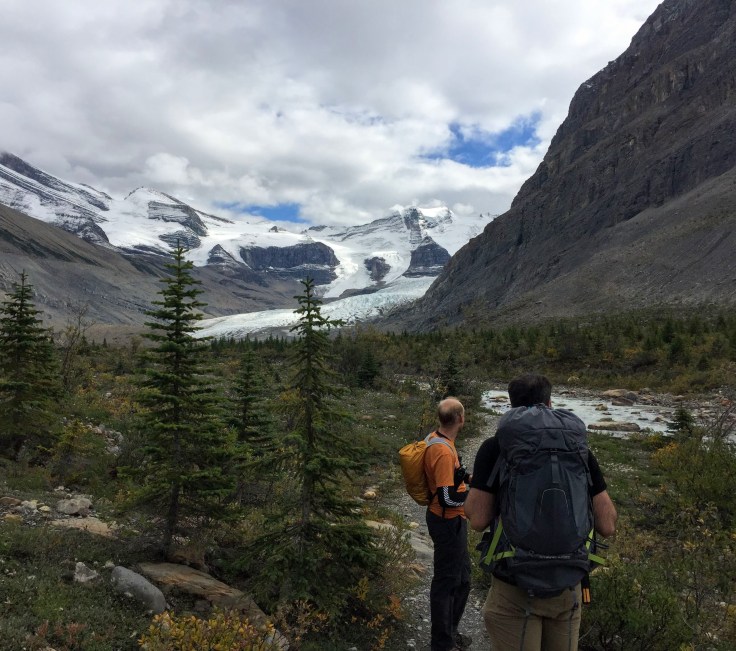
The trail continues to follow the Robson River, and soon opens into the large valley that has been formed by the receding glaciers. The wind whips across this rocky and desolate part of the trail, and the enormity of the surrounding mountains really hits home here. We passed the Marmot campground here at the 19 kilometre mark. The campsite is located in a sheltered section among the trees, but I did note that out of all the campsites it would probably be my last pick because of the potential winds and exposure to inclement weather.

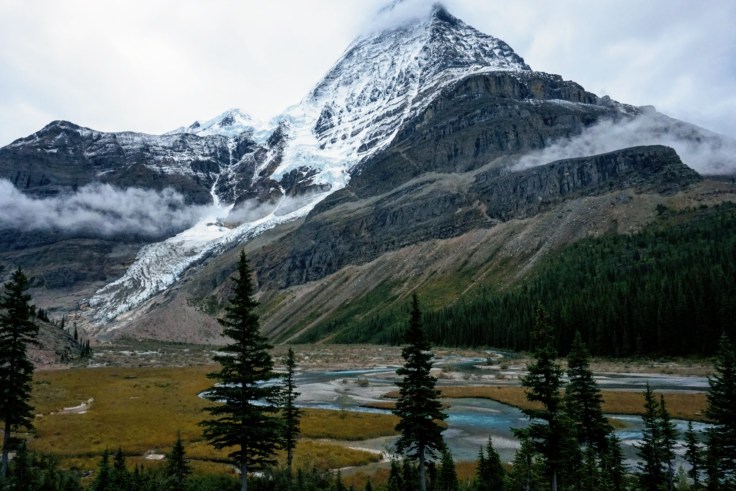
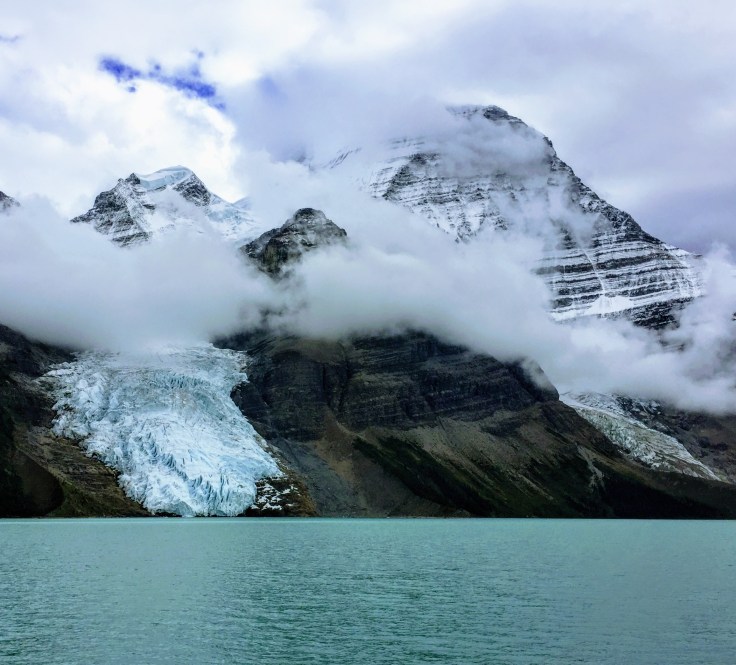
Berg Lake soon came into view, along with the Berg Glacier. The Berg Lake campsite is located at the northern end of the lake, and features a nice enclosed cooking shelter. This is the only enclosed shelter that we saw along the trail; if the weather forecast is not looking good for your hike, I would recommend staying at this campsite, as you can at least cook and hang out inside, protected from the elements. Big, fat drops of rain had started falling when we were passing through, making it an ideal lunch spot.
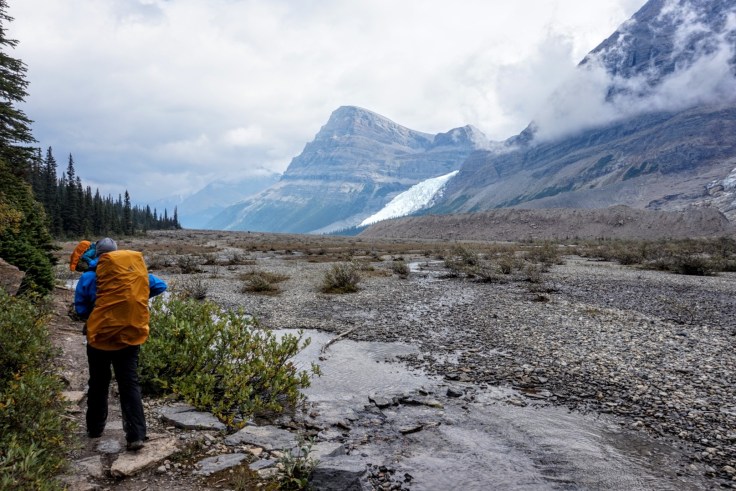
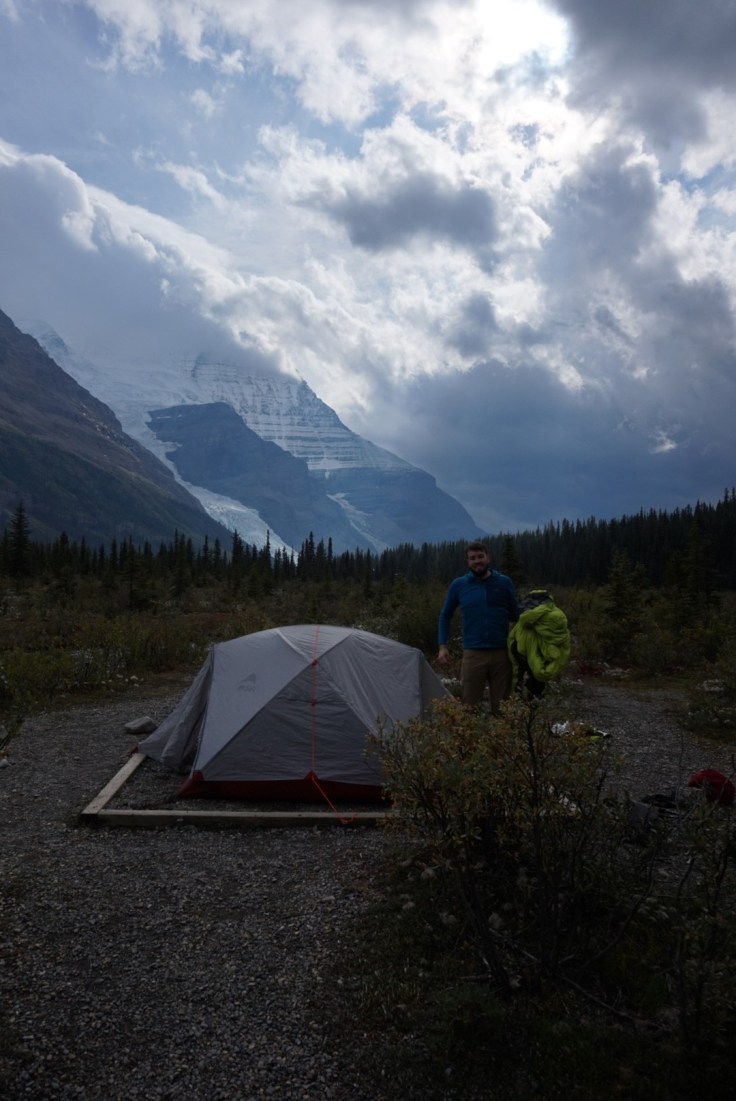
Luckily, the rain was short-lived and we continued on to our destination for the night: Robson Pass campsite. This campsite was quite busy, but we found some good tent pads near a stream. There is a mixture of open sites, and sites tucked into the trees, along with a rough, covered cooking area. We took a stroll down to Adolphus Lake, and crossed the border, marked with a large rock cairn, into Alberta.
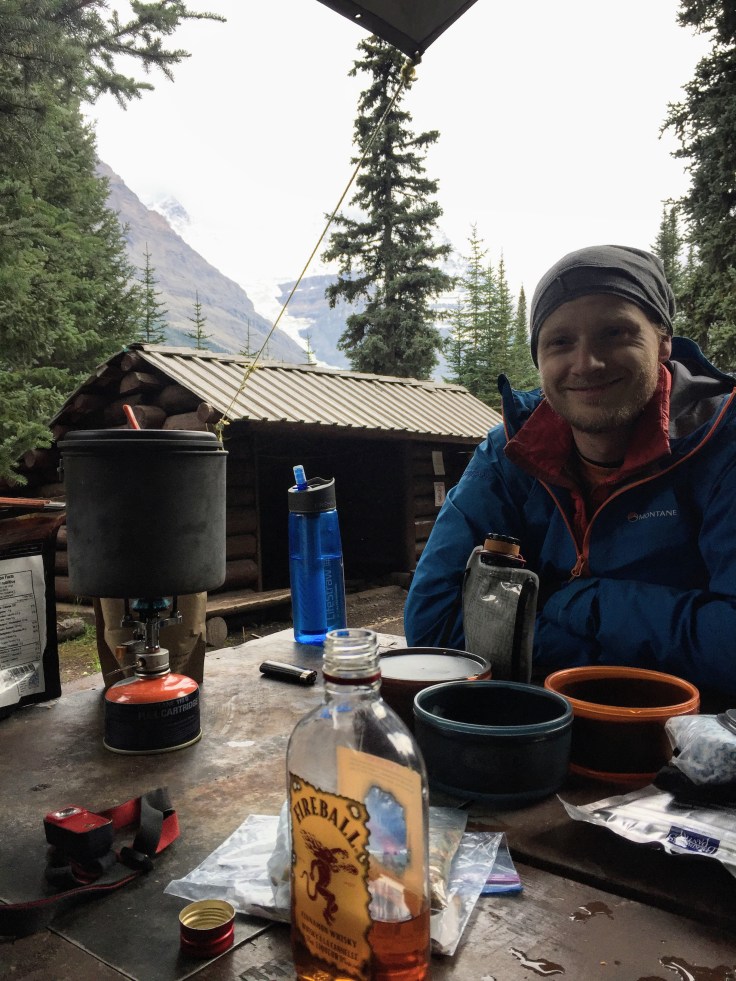
The temperatures dropped quite a bit that night, and we were all thankful for some Fireball to light a fire in our bellies.
Snowbird Pass Route | Robson Pass to Whitehorn
When we woke the next morning, a light dusting of snow had fallen almost all the way down to the valley floor. Breakfast was a cold and quick affair, before readying ourselves for the day’s adventure: the Snowbird Pass Route. I was super excited to do this 18 kilometre side-trip, as I’d heard the views of Robson Glacier were spectacular. We decided to leave our tents up with our heavier items stowed inside, and proceeded with daypacks only. The trail starts at the campsite and soon passes the outflow lake at the base of the glacier, where little icebergs were bobbing along in the grey-brown water. It then follows the lateral moraine, at times becoming quite steep with chains in place to protect hikers from a fall. This is definitely not a hike for those with fear of heights!
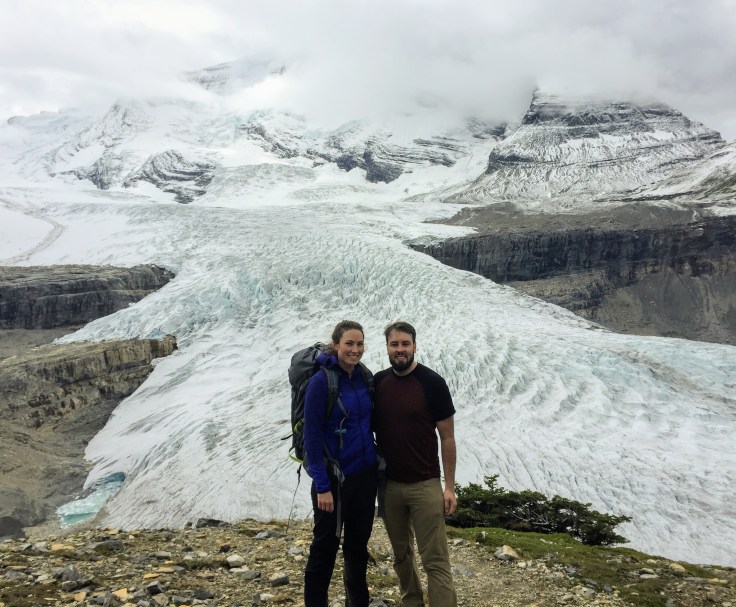
The moraine felt like it went on forever; several times I thought the top of the ridge was just ahead only to be disappointed and see more ‘up’ ahead of us. Finally, we emerged into a beautiful alpine meadow covered in snow from the night before.
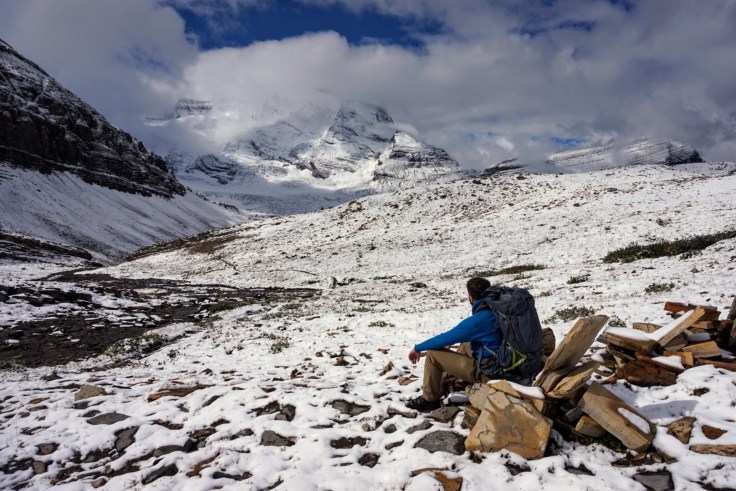
Although we were all tiring by this point, we pushed on through the meadow to Snowbird Pass. As we struggled to the top of the Pass, the Reef Icefield came into view and I was speechless at the sight. A vast expanse of ice stretched before us, with mountains marching off into the distance behind it. I felt so lucky to be this close to an actual icefield – usually people have to pay a lot of money to view these from a helicopter! It was a truly humbling experience and one of the best memories from the trip.


We turned back the way we had come and descended the moraine to Robson Pass campsite. My heart sank a little bit as we walked back into camp, as I knew we still had to pack up the tents and hike to Whitehorn. My legs were already aching and my energy levels were low. But, we only had four days to complete the hike, so another night at Robson Pass was not on the cards.
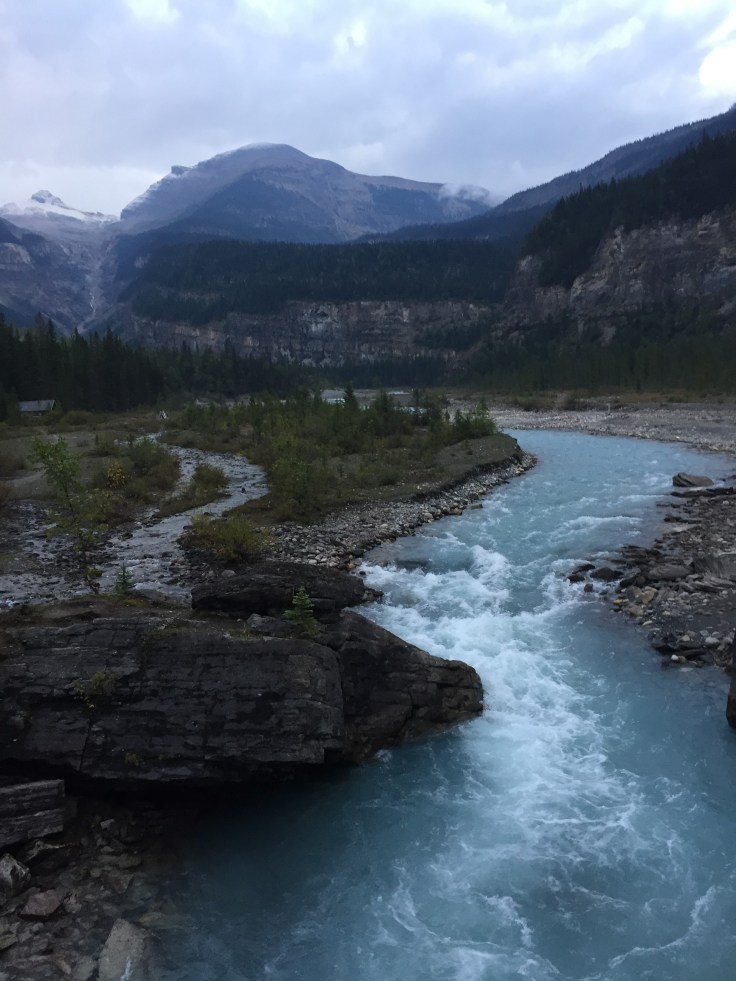
The route was all downhill back to Whitehorn, but I did not enjoy those 12 kilometres. By the time we descended the last switchbacks, my knee had seized up and I was in quite a bit of pain. I hobbled into camp and fell asleep, absolutely exhausted, as soon as dinner was eaten. We had hiked 30 kilometres that day, and I think I had found my distance limit.
Whitehorn to Trailhead
Compared to the previous day’s ambitions, the measly 11 kilometres back to the car seemed very achievable. We enjoyed a bit of a sleep-in, and leisurely breakfast, before packing up and heading out.

As a post-trip reward, we had booked a room in a hotel in Valemount for the night, and it had a hot tub! We all enjoyed a good soak, the tension in our our sore muscles from four days of serious hiking simply melting away. And, of course, we indulged in a delicious steak dinner, which was well appreciated after three nights of dehydrated food.
 Weekend Wilderness
Leave a comment